

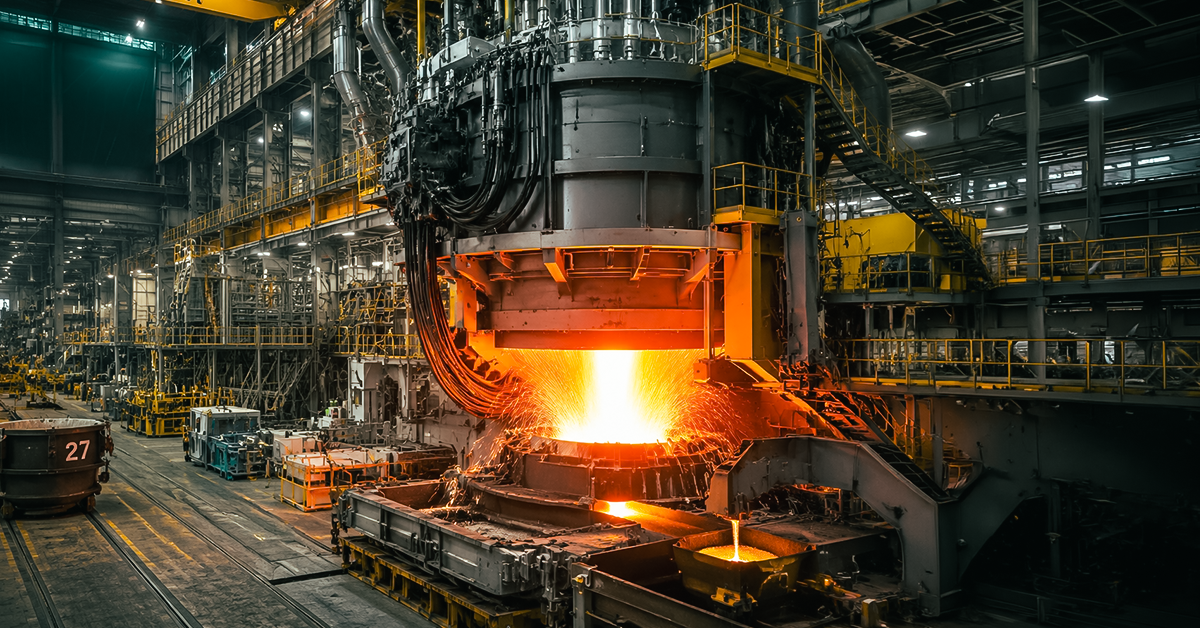
In India, buyers are increasingly looking beyond steel rates and grades to understand how steel is produced and whether it supports long-term construction quality.This is where Electric Arc Furnace steel, or EAF steel, has become an important topic.
Here, we explain what EAF steel is, how it differs from traditional steelmaking, why process control matters, how it relates to TMT bars and why modern EAF facilities are important for India’s construction future.
What is EAF steel?
EAF steel is made by melting steel scrap or other metallic inputs using high-powered electric arcs. Instead of depending mainly on iron ore, coke and a blast furnace, the EAF route uses electricity to melt and refine primary steel.
However, EAF steel should not be understood only as “scrap-based steel”. Its quality depends on how carefully the scrap or metallic input is selected, sorted, refined, tested and processed during manufacturing.
Quick answer: Why does electric arc furnace steel matter?
Electric Arc Furnace steel matters because it shows how modern steelmaking can support recycling, lower-carbon production and construction-grade steel manufacturing when backed by advanced technology, strong process control and proper testing.
EAF steel can offer lower carbon emissions compared to traditional routes, especially when powered by cleaner or renewable electricity. It can also reduce dependence on virgin raw materials by reusing processed steel scrap.
For buyers, the important point is this: scrap-based steel is not automatically inferior. What matters is whether the steel is produced through a scientifically controlled process and whether the final product meets the required standards for strength, ductility, durability and safety.
How is EAF steel different from traditional blast furnace steel?
Traditional steelmaking in large integrated plants usually follows the Blast Furnace–Basic Oxygen Furnace route, also called the BF-BOF route. This process uses iron ore, coal and limestone to produce molten iron, which is then converted into steel.
EAF steelmaking follows a different route. It melts steel scrap or other metallic inputs using electricity and then refines the molten steel to achieve the required chemistry and performance.
| Factor | BF-BOF steelmaking | EAF steelmaking |
| Main raw material | Iron ore, coal/coke and limestone | Steel scrap and/or other metallic inputs |
| Main energy route | Coal-based blast furnace process | Electricity-based melting |
| Chemistry control | Strong control in integrated plants | Strong control when scrap sorting and refining are advanced |
| Sustainability | Higher carbon impact | Lower carbon potential, especially with scrap and renewable electricity |
| Key advantage | Long-established route with predictable quality | Recycles steel and supports lower-carbon production |
| Key challenge | High emissions and resource intensity | Scrap quality, impurity control and process discipline |
Both routes can produce good steel when they are scientifically controlled. The real comparison is not simply “ore-based steel versus scrap-based steel”. The more important difference is between controlled steelmaking and poorly controlled steelmaking.
Is scrap-based EAF steel low quality?
No, scrap-based EAF steel is not automatically low quality. This is a common misunderstanding. Steel quality depends on scrap selection, segregation, refining, chemistry control, equipment, testing and compliance with standards.
In a modern EAF plant, scrap is not randomly melted and sold as steel. It is sorted, analysed, refined and monitored through advanced systems. Processes such as ladle metallurgy, oxygen injection, continuous casting and laboratory testing help control impurities and mechanical properties.
The problem arises when mixed scrap is melted without proper segregation, refining or testing. In such cases, impurities may remain uncontrolled and the steel may show inconsistent performance.
Why does process control matter in EAF steelmaking?
Process control is the most important factor in EAF steelmaking. A modern EAF facility uses controlled scrap sourcing, scientific refining, temperature monitoring, chemistry testing and mechanical-property checks to ensure consistent steel quality.
Good process control helps manage:
- Carbon content
- Sulphur content
- Phosphorus content
- Copper and tin contamination
- Tensile strength
- Yield strength
- Elongation
- Bendability
- Weldability
- Dimensional consistency
This is especially important for rebars used in reinforced concrete buildings because the steel must perform reliably over many years.
Why are some scrap-based steel routes considered risky?
Some scrap-based steel routes are considered risky when they use mixed open-market scrap without adequate sorting, refining and testing. Scrap can come from demolished buildings, old machinery, railway material, industrial waste, imported scrap or unknown sources.
If the scrap is not properly controlled, elements such as copper, sulphur, phosphorus or tin may remain in the steel. These can affect ductility, weldability, corrosion behaviour and long-term consistency.
This is why buyers should not judge steel only by whether it is scrap-based or ore-based. They should ask whether the steel is produced by an organised manufacturer with proper process control, BIS compliance and quality assurance.
What is the role of BIS standards in rebar quality?
In India, rebars are mainly governed by the BIS standard IS 1786. This standard covers important requirements such as yield strength, tensile strength, elongation, bend and rebend performance, chemical composition and dimensional tolerances.
However, buyers should also understand that meeting minimum BIS requirements is only one part of the quality story. Large organised manufacturers may maintain tighter tolerances and better consistency across batches. This consistency becomes important in long-life structures where predictable performance matters.
Why does EAF steel matter for TMT bars?
EAF steel matters for TMT bars because it can provide a modern, recycled and lower-carbon route for producing construction-grade rebars. When produced in a well-controlled plant, EAF steel can meet the mechanical and chemical requirements needed for construction.
For TMT bars, buyers should check:
- Grade
- BIS certification
- Yield strength
- Tensile strength
- Ductility
- Elongation
- Bendability
- Rib pattern
- Bond with concrete
- Dealer authenticity
- Test certificates, where applicable
The furnace route matters, but it is not the only factor. The final quality depends on the full manufacturing, rolling, testing and quality-control process.
Why is Tata Steel’s Ludhiana EAF plant important?
Tata Steel’s Ludhiana plant is important because it brings modern EAF-based steelmaking into a major North Indian construction market. The plant is based on Electric Arc Furnace technology and uses processed steel scrap, including automobile and other suitable scrap sources, to manufacture construction-grade steel.
This is significant for Punjab and nearby regions because a large quantity of reinforcement steel is used in housing and local construction. A modern EAF plant operated by an organised manufacturer can help address two needs at the same time: construction-grade steel quality and lower environmental impact.
It also helps change the perception that scrap-based steel is always inferior. When suitable steel scrap is properly processed, refined and tested, it can become a valuable raw material for producing reliable steel.
Does EAF steel support sustainability?
Yes, EAF steel supports sustainability because it reuses existing steel scrap and reduces dependence on fresh iron ore and coal-intensive production routes. It also supports the circular economy by converting end-of-life steel into new construction and industrial products.
The sustainability benefits can include:
- Reduced need for mining fresh raw materials
- Lower use of coal-based processes
- Reuse of automobile and industrial scrap
- Reduced waste burden
- Support for responsible consumption
- Potential reduction in carbon emissions
- Better alignment with modern infrastructure sustainability goals
The environmental benefit becomes stronger when EAF plants use clean electricity, organised scrap supply chains and efficient refining systems.
Is EAF steel useful for green construction?
EAF steel can be useful for green construction because it can help reduce the carbon footprint of steel used in construction, especially when produced with cleaner electricity, efficient operations and proper emissions control.
For green construction projects, EAF steel may support sustainability documentation, responsible sourcing practices and lower-carbon project planning. However, buyers should always verify product claims through official documentation, certificates and supplier information.
Does EAF steel mean every rebar is sustainable?
No. EAF steel does not automatically mean every rebar is sustainable. The sustainability of EAF steel depends on the quality of scrap processing, source of electricity, plant efficiency, emissions control and the overall manufacturing process
A poorly controlled EAF or scrap-melting route may not deliver the same environmental and quality benefits as a modern, organised EAF facility. This is why buyers should look for both sustainability and quality assurance.
Does EAF steel mean better construction quality?
EAF steel can support good construction quality when it is made through a controlled process and tested properly. But EAF steel is not automatically better only because it is made in an electric furnace.
Construction quality depends on:
- Rebar grade
- Chemical composition
- Mechanical properties
- Ductility
- Rib geometry
- Consistency across batches
- Concrete quality
- Curing practice
- Site workmanship
- Correct bar placement
- Engineer supervision
Even high-quality steel can perform poorly if concrete is weak, curing is inadequate or reinforcement is placed incorrectly.
What should buyers ask before choosing EAF steel?
Before choosing EAF steel, buyers should ask practical questions, not just accept the word “EAF” as a quality claim.
Useful questions include:
- Is the steel BIS-certified?
- Which grade is being supplied?
- What is the source of the steel?
- Is the steel produced by an organised manufacturer?
- Is the scrap properly sorted and refined?
- Is the product suitable for structural design?
- Are test certificates available?
- What quality checks are followed?
- Is the dealer authorised?
These questions help buyers understand both the technical and commercial value of the steel.
What is the difference between organised EAF steel and poorly controlled scrap steel?
Organised EAF steel is produced through planned scrap selection, refining, testing, chemistry control and quality assurance. Poorly controlled scrap steel may be made by melting mixed scrap with limited control over impurities and mechanical properties.
| Factor | Organised EAF steelmaking | Poorly controlled scrap melting |
| Scrap source | Sorted and processed | Mixed and uncertain |
| Chemistry control | Monitored and refined | Often limited |
| Testing | Regular and systematic | May be inconsistent |
| Quality | More predictable | Higher variability |
| Suitability | Can meet construction-grade requirements | May carry long-term risks |
| Sustainability | Stronger when well-managed | Less reliable as a quality claim |
This distinction is important for buyers in North India, where both organised and unorganised steel supply routes may exist.
Why does EAF steel matter for Punjab and North India?
EAF steel matters for Punjab and North India because the region has high demand for TMT bars in homes, commercial buildings, factories, warehouses, schools, hospitals and infrastructure projects. At the same time, modern construction buyers are becoming more conscious of quality, safety and sustainability.
A plant such as Tata Steel’s Ludhiana EAF facility connects local construction demand with modern steel recycling. It can help convert processed steel scrap into construction-grade steel through a controlled manufacturing process.
For buyers, this brings attention to a new question: not just “What is the steel rate?” but also “How is the steel made and how reliable is its quality?”
Can EAF steel reduce construction cost?
EAF steel does not automatically reduce the purchase cost of steel. The final price depends on scrap cost, electricity cost, grade, brand, market demand, logistics, dealer margin and quantity ordered.
However, EAF steel can offer value beyond rate. It can support responsible sourcing, sustainability goals and long-term material assurance when produced by a reliable manufacturer. This broader value may matter for buyers who are considering quality, documentation and responsible construction along with price.
Expert insight: What should buyers understand about EAF steel?
The most important point is that EAF steel should not be judged only by the word “scrap”. Steel scrap can become high-quality construction steel when it is scientifically sorted, refined, tested and processed in a modern plant. At the same time, not all scrap-based steel is equal. Poorly controlled melting routes can create quality variation and long-term durability concerns.
For construction buyers, the safer approach is to choose BIS-certified rebars from reputed manufacturers and combine them with good concrete, proper curing, correct reinforcement placement and strong site supervision. Long-term structural safety depends on the full quality culture of construction, not on one material claim alone.
