

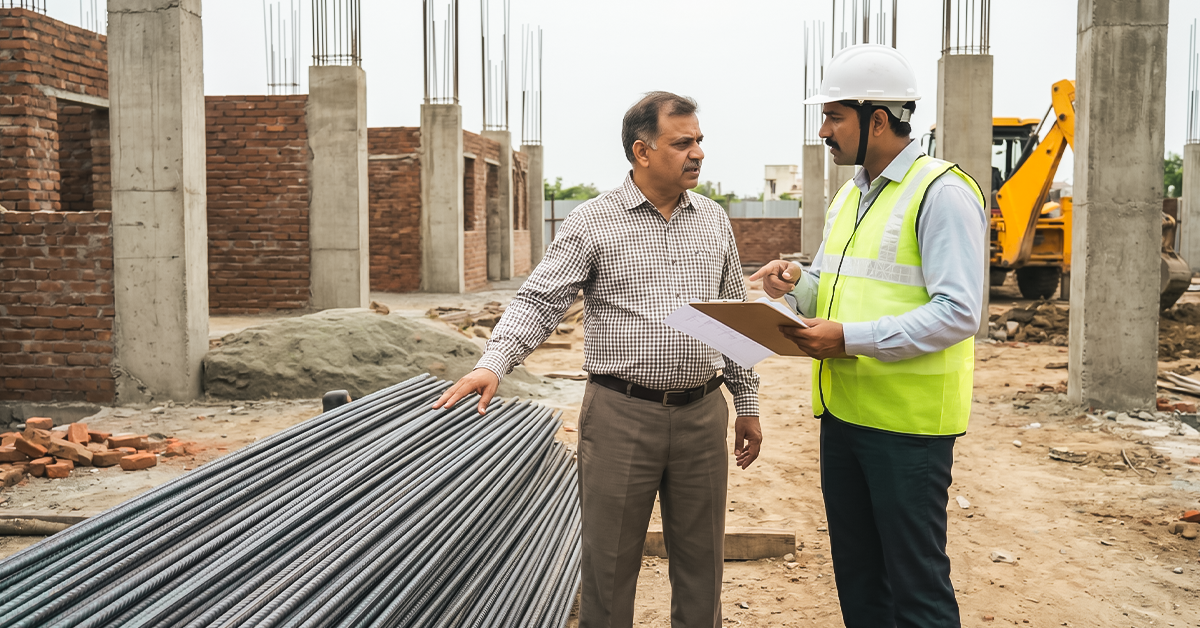
For first-time home builders in India, buying TMT sariya can feel confusing. There are many grades, diameters, brands, rates and dealer options. Many buyers begin by asking, “What is today’s TMT sariya rate?” While price is important, it should not be the only factor. The right TMT bar should match the structural design, soil condition, local climate, earthquake risk, and long-term durability needs of the house.
Here is a practical TMT sariya buying checklist for Indian home builders.
What is TMT sariya and why is it important for home construction?
TMT sariya, also called TMT bar, is used inside reinforced concrete in foundations, columns, beams, slabs, staircases, lintels and walls. Concrete is strong in compression, but it is weak in tension. TMT bars provide tensile strength and help the structure resist cracking, bending and load-related stress.
Good-quality TMT sariya for construction should offer strength, ductility, bendability and proper bonding with concrete. However, buyers should understand that TMT bars offer limited corrosion resistance on their own. Actual durability depends strongly on concrete quality, adequate concrete cover, curing, water-cement ratio and exposure conditions. In high-corrosion environments, specialised corrosion-resistant variants may be required as per engineer guidance.
If the wrong grade, size or quantity is used, the safety and life of the house may be affected. This is why first-time home builders should always buy TMT sariya based on an engineer’s recommendation.
Quick checklist: What should first-time home builders check before buying TMT sariya?
| What to check | Why it matters |
| Structural drawing | Ensures steel is bought as per design, not guesswork. |
| Steel grade | Affects strength, ductility, elongation and structural suitability. |
| Bar diameter | Different parts of the house need different bar sizes. |
| Total quantity | Helps avoid overbuying, shortage and last-minute purchases. |
| Soil condition | Weak, filled or waterlogged soil may need special foundation design. |
| Weather exposure | Moisture, rain, salt and humidity can affect corrosion risk and storage planning. |
| Earthquake zone | Higher ductility and elongation requirements may be relevant in seismic regions. |
| Dealer authenticity | Reduces the risk of duplicate or poor-quality material. |
| BIS compliance and identification markings | Ensure the TMT bars comply with relevant BIS standards such as IS 1786 and carry proper product identification markings. |
| Final landed cost | Includes rate, taxes and any applicable dealer-level logistics, loading, unloading or handling charges. |
| Storage plan | Protects steel before use at site. |
This checklist should be discussed with the structural engineer, contractor and authorised dealer before ordering.
Why should you not choose TMT sariya based only on price?
Choosing TMT sariya only on the basis of price can be risky. A cheaper quotation may look attractive at first, but it may not give the right grade, correct diameter, proper invoice, genuine product or reliable dealer support.
Poor-quality or unsuitable TMT bars can create problems such as:
- Incorrect reinforcement usage
- Higher wastage at site
- Cutting and bending issues
- Lack of product traceability
- Poor structural performance
- Future repair and maintenance concerns
- Delay in construction work
Since TMT sariya is embedded inside concrete, it is difficult to inspect or replace after construction. Therefore, first-time home builders should compare total value, not just the lowest rate.
Why is the structural drawing important before buying TMT sariya?
The structural drawing is the most important document before buying a TMT sariya. Do not buy TMT sariya only because a contractor or dealer suggests a particular size. The structural engineer decides the grade, diameter and quantity based on the design of the house.
Before ordering, ask:
- What grade of TMT sariya is required?
- Which diameters are needed?
- How much steel is required for the foundation, columns, beams and slabs?
- Is the house designed for future floors?
- Are stirrups, rings or links included in the estimate?
This helps prevent wrong purchases and avoids unnecessary wastage.
How to choose the right grade of TMT sariya for construction?
TMT bars are available in grades such as Fe500, Fe500D, Fe550 and other specialised grades such as Tata Tiscon 550SD. The grade indicates the strength and performance of the steel. For first-time home builders, the simplest rule is to follow the engineer’s recommendation.
In grades that carry the “D” designation, the “D” refers to higher ductility and elongation requirements as defined under IS 1786. This means the bar is expected to deform better under stress instead of failing suddenly. Such grades also follow stricter chemical composition limits, including limits for carbon, sulphur and phosphorus, which can support better bendability, weldability and overall performance.
| Grade factor | What home builders should understand |
| Strength | Helps the structure carry load. |
| Ductility | Helps the steel absorb stress without sudden failure. |
| Bendability | Supports easier cutting and bending at site. |
| Corrosion resistance | Important in moisture-prone areas. |
For Tata Tiscon 550SD, the “SD” indicates superior ductility. It is designed for buyers who want to look beyond basic reinforcement and choose a high-strength, super-ductile TMT rebar for safer and stronger RCC construction. With higher yield strength, a strong UTS/YS ratio, improved elongation and enhanced ductility, it is designed to absorb stress more effectively and support safer construction in demanding conditions, including seismic-prone areas. Its specially designed rib pattern helps create a stronger bond with concrete, while its bendability makes it suitable for accurate bar bending and detailing at site.
The key point is simple: do not upgrade, downgrade or substitute the grade without engineer approval.
How do local climate and weather affect TMT sariya selection?
India has different climate conditions across regions. A home in a coastal city does not face the same exposure as a home in Rajasthan, Punjab, Assam, Himachal Pradesh or Kerala. This is why first-time home builders should consider local weather before buying and storing TMT bars.
Weather affects corrosion risk, storage method, concrete quality and curing practice. Bars left in rainwater, mud or high humidity may develop rust before they are fixed in the structure. Even after construction, poor concrete cover and moisture exposure can increase corrosion risk.
Weather-based TMT sariya checklist for Indian home builders
| Region or climate type | Common concern | What to check before buying |
| Coastal areas such as Mumbai, Chennai, Kochi, Goa and coastal Odisha | High humidity and salt exposure | Ask about corrosion resistance, proper concrete cover and good curing. Avoid long open storage near salty moisture. |
| High-rainfall regions such as Kerala, Assam, Meghalaya and parts of West Bengal | Frequent rain and damp storage | Keep bars raised, covered and ventilated. Plan delivery close to usage. |
| North Indian plains such as Punjab, Haryana, Delhi NCR and Uttar Pradesh | Monsoon rain, winter fog, dust and temperature variation | Store bars on raised supports and inspect for rust before use. Check ductile grades if the area has seismic concerns. |
| Hot and dry regions such as Rajasthan and parts of Gujarat | Dust and fast moisture loss during curing | Clean dust-coated bars before fixing and ensure proper curing after concreting. |
| Hilly and cold regions such as Himachal Pradesh, Uttarakhand and Jammu & Kashmir | Seismic risk, slope conditions and difficult transport | Use engineer-approved ductile grades and plan delivery carefully. |
| Flood-prone or waterlogged areas | High groundwater and damp foundations | Discuss foundation design, waterproofing, concrete cover and corrosion protection. |
| Urban and industrial areas | Pollution and chemical exposure | Keep bars away from chemicals, cement slurry and industrial waste. Use good-quality concrete to protect reinforcement. |
The aim is not to choose steel independently based on climate, but to understand the questions that should be discussed with the engineer.
Why should home builders consider earthquake safety when buying TMT sariya?
Several parts of India fall under seismic zones. In such regions, reinforcement steel should not only carry load but also support controlled deformation during stress. During an earthquake, steel reinforcement should help the RCC structure absorb energy and deform gradually rather than fail suddenly.
Home builders should ask the structural engineer whether TMT bars with higher ductility and elongation requirements are needed for the site’s seismic zone and structural design. Every TMT bar has some ductility, but certain products are designed to meet higher ductility and elongation requirements.
Earthquake safety also depends on:
- Structural design
- Column-beam joint detailing
- Stirrup spacing
- Lap length
- Concrete quality
- Proper curing
- Correct cover
- Site workmanship
How does soil condition affect TMT sariya requirement?
Soil condition directly affects foundation design. Weak soil, filled land, black cotton soil, sloping land or waterlogged plots may require special foundation planning. In some cases, bar diameter and steel quantity may change based on site conditions.
| Site condition | Why it matters |
| Weak soil | May need stronger foundation design. |
| Filled land | Can increase settlement risk. |
| Waterlogged plot | Needs better concrete protection and corrosion planning. |
| Sloping land | May need special structural detailing. |
| Future floor planning | Requires stronger load-bearing design. |
A soil test can be useful for larger homes, multi-storey houses or plots with uncertain ground conditions.
How to choose the right diameter and quantity of TMT sariya?
Different parts of a house need different TMT bar sizes. Smaller diameters may be used for links or lighter reinforcement, while larger diameters may be required for columns, beams and foundations.
Common sizes include 8 mm, 10 mm, 12 mm, 16 mm, 20 mm and above. The exact size should come from the structural drawing. Do not assume one bar size can be used everywhere.
Before buying, ask the contractor for a diameter-wise requirement list. This helps reduce wastage and prevents site confusion.
How to check dealer authenticity and product details before buying TMT sariya?
Always buy TMT sariya from a reliable or authorised dealer. First-time home builders should avoid unverified suppliers offering unusually low rates. Duplicate or poor-quality steel can affect the safety of the house.
Before finalising the order, check:
- Brand name
- Grade
- Diameter
- Length
- Quantity
- Weight details
- Invoice
- Dealer details
- GST
- Delivery charges
- Product marking or tag, where available
Why should buyers compare final landed cost and not just TMT sariya rate?
The cheapest quotation is not always the best deal. One dealer may quote a lower rate but add delivery, unloading or handling charges later. Another dealer may offer a higher rate but include delivery and proper billing.
| Cost component | What to confirm |
| Basic rate | Is it per kg, per tonne or per piece? |
| GST | Is tax included or extra? |
| Delivery | Is site delivery included? |
| Unloading | Is labour cost extra? |
| Wastage | Is cutting and bending planned properly? |
| Storage | Is there space to protect steel after delivery? |
A smart buyer compares the final landed cost at site.
How to plan storage of TMT sariya at site before use?
Bars should not be kept directly on wet ground, mud or waterlogged areas. They should be placed on raised supports and covered during rain.
Storage checklist:
- Keep bars above ground level
- Store different sizes separately
- Keep steel away from water and mud
- Cover with tarpaulin during rain
- Allow ventilation under the cover
- Avoid dragging bars through soil
Light surface rust is generally acceptable in many site conditions. However, heavily rusted, pitted or flaky bars should be checked, cleaned or rejected as per engineer guidance. If there is doubt, the site engineer should inspect the bars before use.
Expert insight: What is the right approach to buying TMT sariya for your first home?
Buying TMT sariya for your first home should not be a rushed decision. The right steel supports the strength, safety and durability of the entire structure. Instead of choosing only by price, home builders should consider grade, diameter, soil condition, local climate, earthquake risk, dealer reliability, storage and total cost.
The safest approach is to begin with the structural drawing and ask the engineer for a clear diameter-wise and grade-wise requirement. Once the requirement is finalised, buyers should compare dealer quotations, check BIS compliance, confirm product identification markings, verify dealer authenticity and understand the final payable cost.
TMT bars should also be stored properly after purchase. Even the right steel can create site-level problems if it is kept in mud, mixed by size or handled carelessly. For first-time home builders, the best buying decision is the one that balances structural safety, genuine product supply, transparent pricing and proper site handling. Here is a useful guide that you can refer to before placing your order.
