

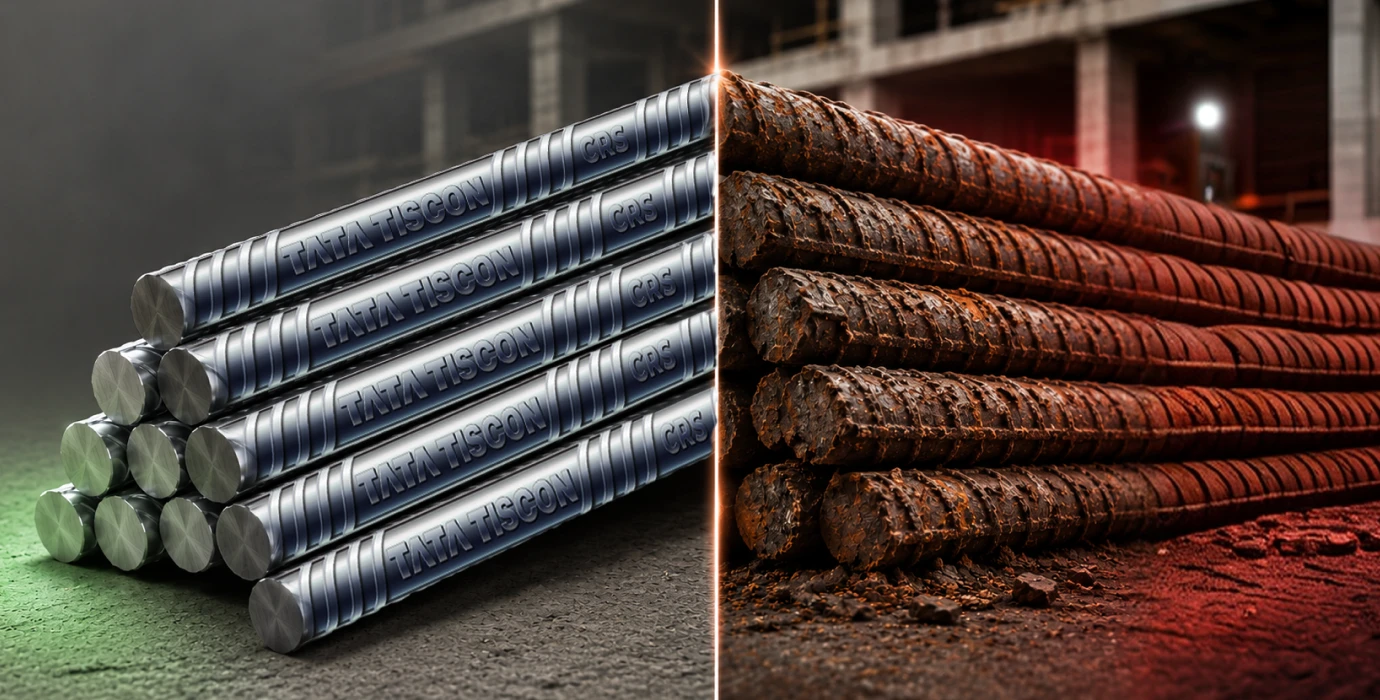
Rust on stored TMT rebars can look alarming, especially during the monsoon. However, a light layer of surface rust does not automatically make a rebar unsuitable. The condition of the surface, ribs and steel section matters more than colour alone. Knowing what to check prevents the rejection of usable steel and the use of severely corroded bars.
Why Do TMT Rebars Rust?
Steel reacts with oxygen and moisture to form rust. Rebars stored outdoors are more likely to rust during prolonged rain, high humidity or contact with wet soil. Poor drainage and trapped moisture speed up the process.
Rust formed before concreting differs from corrosion that develops after the rebar is embedded. Concrete’s alkaline environment and adequate cover protect the steel. Poor concrete quality, cracks, insufficient cover or the entry of water and chlorides can weaken this protection, affecting TMT Rebar durability.
When Is Surface Rust on TMT Rebars Acceptable?
A thin, uniform and firmly attached orange-brown layer is generally considered light surface rust. It may be acceptable when:
- The ribs and identification marks remain clearly visible.
- There is no loose or flaky scale.
- The bar has no deep pits or visible reduction in diameter.
- The required weight, dimensions and deformation pattern remain within the applicable specification.
Light rust can increase surface roughness and does not necessarily weaken the bond with concrete. Even so, the bar must be free from loose rust, mud, oil and other substances that may reduce the bond before concreting.
When Should Rusted TMT Rebars Cause Concern?
Rusted TMT Rebars need closer inspection when corrosion is thick, uneven or flaky. Warning signs include:
- Loose rust scales that fall away during handling.
- Deep pits or cavities on the surface.
- Ribs that have become unclear or visibly reduced.
- A noticeable reduction in the bar’s diameter or cross-section.
- Long exposure to standing water, wet soil, salt or chemicals.
Do not approve or reject a bar from its colour alone. If these signs are present, ask the structural engineer to assess them. Wire brushing may remove loose surface material, but it cannot restore steel lost to corrosion. Affected bars may require dimensional checks, weight measurement or testing.
Protecting TMT Rebars During the Monsoon
For home construction sites in Bihar, the monsoon can leave stored rebars exposed to repeated rain, humidity, mud and standing water. Correct storage limits this exposure and protects TMT Rebar quality:
- Place rebars on raised sleepers, clear of the ground and standing water.
- Use a firm, well-drained storage area away from mud.
- Cover the top against direct rain while keeping the sides ventilated.
- Avoid wrapping wet bars tightly in plastic, as this can trap moisture.
- Separate bundles by size and use older stock first.
- Inspect and clean the bars before cutting, bending or fixing.
Repeated wetting can turn light surface rust into more serious corrosion, so the storage area should remain part of the site’s daily monsoon checks.
Choosing Rebars Where Corrosion Is a Concern
The right TMT rebar for a home depends on the structural design and the site’s exposure conditions. The structural engineer should specify the grade, size and quantity rather than relying on a general claim about which product is best.
Where persistent moisture or an aggressive environment increases the risk, corrosion-resistant TMT rebars may be considered. Tata Tiscon CRS550D contains copper and chromium, which support the formation of a protective oxide layer and improve corrosion resistance compared with conventional reinforcement. However, rust resistance does not make any rebar rust-proof. Adequate concrete cover, dense concrete, correct compaction, curing and drainage remain essential.
Buying and Verifying TMT Rebars
Once the required product, grade and diameter have been specified, the focus shifts from choosing the steel to sourcing it correctly. Use the official dealer locator to find authorised TMT Rebar Dealers in Bihar serving your district. Ask for a proper invoice and test certificate, and confirm the brand, grade, diameter and quantity when the rebars arrive.
Appearance alone cannot establish whether a rebar is genuine or confirm its performance. Check the bundle details and purchase records through official channels. Choosing a genuine Tata Tiscon TMT Rebar product and following correct storage and construction practices provides a stronger foundation for long-term performance.
Conclusion
Light, firmly attached surface rust is usually not a reason to reject TMT rebars. Loose scales, pitting, damaged ribs or section loss are warning signs that require professional assessment. Store rebars correctly during the monsoon, check every delivery carefully and let the structural engineer make the final decision wherever corrosion appears significant.