

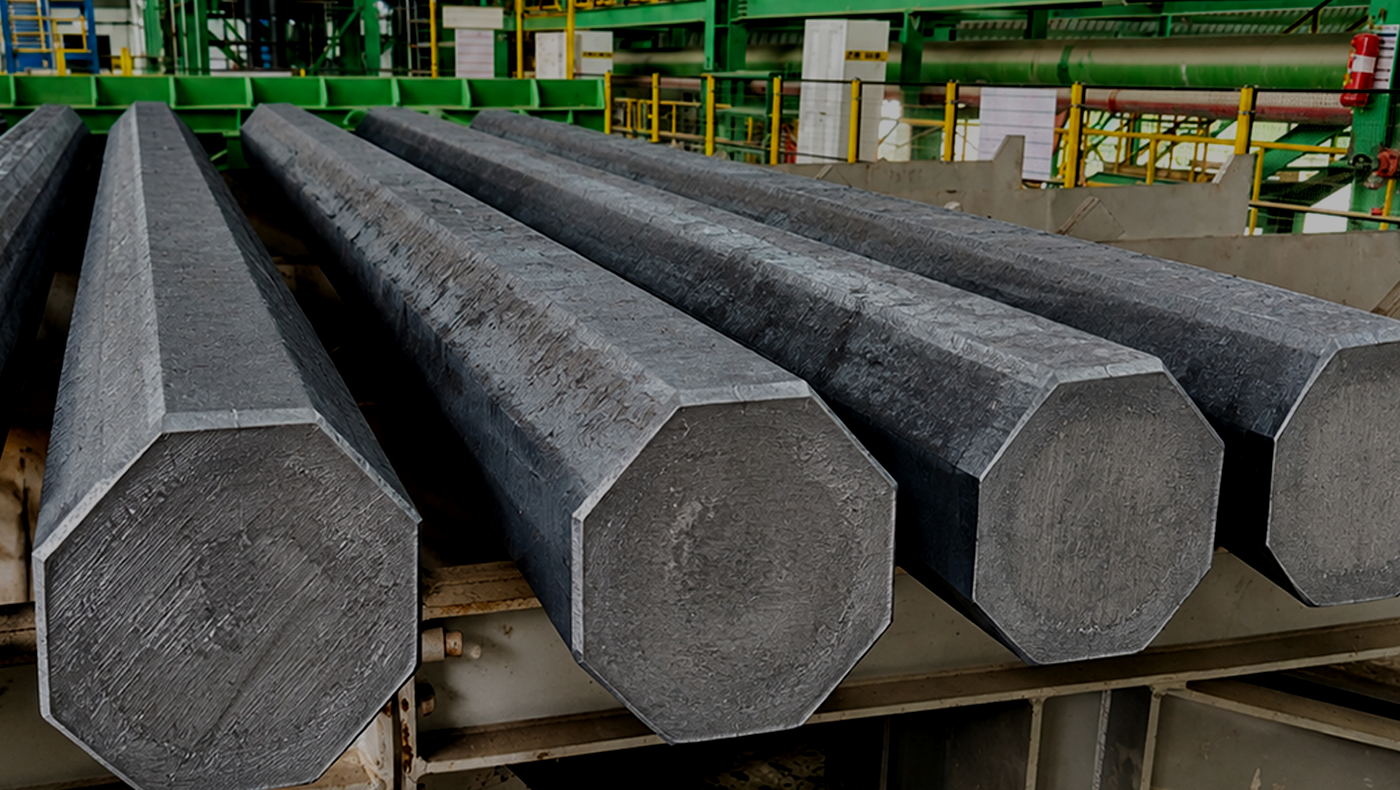
Tata Steel Ludhiana has received the Bureau of Indian Standards (BIS) licence under IS 14650:2023 for the production of octagonal billets. This makes it the first steel producer in India to receive this certification.
The development is significant because octagonal billets will be used in the production of Tata Tiscon TMT rebars in Ludhiana plant . These rebars are used across residential construction, commercial construction, infrastructure projects, industrial applications, and power-sector projects.
For homeowners and construction buyers, this milestone is important because the quality of a TMT rebar does not begin only at the final product stage. It starts much earlier, with the billet, steelmaking process, rolling efficiency, dimensional accuracy, and quality-control systems followed during manufacturing.
What Are Octagonal Billets?
Billets are semi-finished steel products that are later rolled into finished products such as TMT rebars. Traditionally, billets may be square or rectangular. Octagonal billets have an eight-sided shape.
This design is important because it improves material flow during rolling. Better material flow can support improved dimensional consistency in the final rebars. For construction steel, this matters because rebars need to meet defined expectations for diameter, roundness, strength, toughness, ductility, and quality.
Octagonal billets also offer a higher surface area than square or rectangular billets. This helps improve heat transfer and supports more uniform cooling during processing. Better cooling and improved grain flow can contribute to better strength, toughness, and ductility in the final product.
Why Is the BIS Licence Important?
The BIS licence under IS 14650:2023 recognises Tata Steel Ludhiana’s manufacturing processes and quality systems for octagonal billets. This is not only a compliance milestone. It also reflects process capability, quality assurance, and technological advancement in billet production.
Subodh Pandey, Vice President – Technology, R&D, NMB and Graphene, Tata Steel, said that the licence validates the capability developed at Ludhiana. He also linked the achievement to Tata Steel’s focus on technological excellence, differentiated product offerings, and a greener steelmaking ecosystem.
For buyers, BIS certification matters because it brings a recognised quality framework into the manufacturing process. When the input material is produced under a certified system, it can support better confidence in the consistency of the final TMT rebars.
How Do Octagonal Billets Improve TMT Rebar Production?
Octagonal billets can support better rebar production in several ways. Their shape helps improve rolling behaviour, heat transfer, cooling, and deformation during rolling.
Compared to square and rectangular billets, octagonal billets can offer better metal yield because they reduce corner losses. They can also reduce wear on rolling mill equipment because rolling forces are more uniform.
| Feature of octagonal billets | How it helps rebar production |
| Higher surface area | Supports better heat transfer and uniform cooling. |
| Improved material flow | Helps during rolling and supports better consistency. |
| Better grain flow | Can contribute to strength, toughness, and ductility. |
| More uniform deformation | Supports better roundness and dimensional accuracy. |
| Lower corner losses | Helps improve metal yield. |
| More uniform rolling forces | Can reduce wear on rolling mill equipment. |
| Better material utilisation | Supports efficiency and reduces wastage. |
| Energy efficiency | Contributes to a greener steelmaking ecosystem. |
These improvements are relevant because TMT rebars are not decorative materials. They become part of the structural system of a building.
This range shows why billet quality and process consistency matter.
How Does This Support a Greener Steelmaking Ecosystem?
The octagonal billet design can improve material utilisation and energy efficiency. Higher metal yield means more efficient use of material. Lower corner losses help reduce wastage during rolling. Reduced wear on rolling mill equipment can also support better process efficiency.
These improvements contribute to a greener steelmaking ecosystem because they support better resource use, lower process losses, and more efficient manufacturing.
This also aligns with Tata Steel’s wider sustainability direction. The company has announced its Net Zero by 2045 objective and has been recognised for sustainability, digital steelmaking, and responsible manufacturing. In India, Tata Steel now has more than 90% of its steel production from ResponsibleSteelTM certified sites.
