

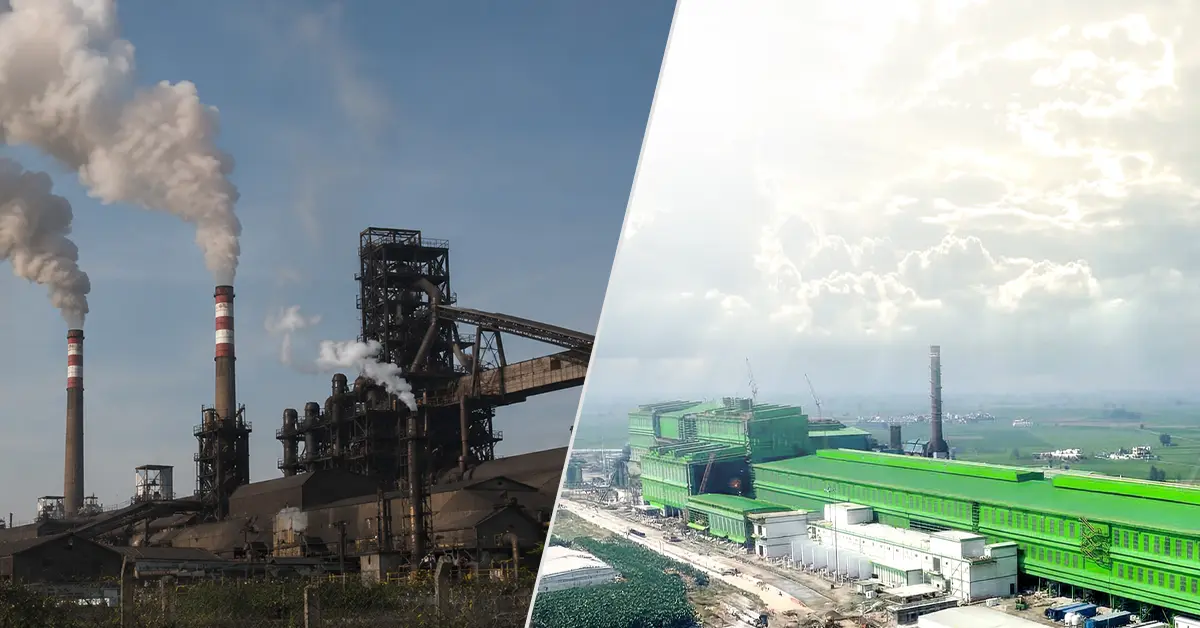
Steel buying is changing in India. Buyers are no longer looking only at rate, grade and availability; they are also trying to understand how steel is made, whether it supports responsible construction and whether it is suitable for long-term structural use. This is where Electric Arc Furnace, or EAF steel, has become an important topic. However, many buyers still have doubts regarding EAF steel because they associate scrap-based steel with poor quality. At the same time, some may assume that all EAF steel is automatically green or superior. Both views need better clarity.
Here, we explain EAF steel applications, myths, facts, standards and buyer checks related to EAF steel, especially for construction and TMT bar use in India.
What is EAF steel?
EAF steel is steel made through the Electric Arc Furnace route. In this process, steel scrap or other metallic inputs are melted using high-powered electric arcs and then refined, tested and processed into finished steel products and considered as primary steel.
In India, EAF steel is becoming more important because it supports scrap recycling, lower-carbon steelmaking and modern construction-grade steel production. However, buyers should understand one important point clearly: EAF steel is not good or bad only because it is made from scrap. Its quality depends on how the scrap is selected, sorted, refined, chemically controlled, tested and converted into the final product.
Quick answer: Why should Indian buyers understand EAF steel?
Indian buyers should understand EAF steel because it is becoming an important part of modern steelmaking, especially for construction steel, TMT bars, structural steel and other long products. It can support sustainability and resource efficiency, but buyers must check BIS certification, grade, source, test documentation, dealer authenticity and suitability for the project .
What are the main applications of EAF steel?
EAF steel can be used in several construction and industrial applications, depending on the grade, chemistry and manufacturing control.
Common applications include:
| Application | Why EAF steel is relevant |
| TMT bars and rebars | Used in RCC foundations, beams, columns, slabs and walls. |
| Structural steel | Used in buildings, sheds, industrial structures and fabrication. |
| Billets and blooms | Used as semi-finished inputs for rolling mills. |
| Wire rods | Used in downstream products, mesh, wires and construction applications. |
| Industrial steel products | Used where grade, chemistry and process control are suitable. |
The final application depends on quality control. EAF steel meant for construction should meet the required Indian Standards and project specifications.The final application depends on quality control. EAF steel meant for construction should meet the required Indian Standards and project specifications.
Is EAF steel used for TMT bars in India?
Yes, EAF steel can be used to manufacture TMT bars in India when the steel meets the required specifications. For TMT bars, buyers should check whether the product conforms to the relevant Indian Standard, especially IS 1786 for high-strength deformed steel bars and wires for concrete reinforcement.
For construction buyers, the production route is only one part of the decision. A TMT bar should also be checked for grade, ductility, elongation, bendability, rib pattern, weight, diameter, dealer authenticity and test certification where applicable.
Let us dispel some myths, as they can affect how buyers judge EAF steel, compare TMT bars and make decisions about construction quality, safety, durability and sustainability.
Myth 1: EAF steel is just low-quality scrap steel
No. This is one of the biggest myths about EAF steel. EAF steel can be high-quality steel if the scrap is properly sorted, processed, refined and tested.
The problem is not the use of scrap. The problem is poor process control. Scrap from organised sources, such as automobile scrap, can be a valuable raw material when it is scientifically processed. On the other hand, mixed scrap from unknown sources can create quality risks if it is melted without proper segregation and refining.
Myth 2: Ore-based steel is always better than EAF steel
Ore-based steel from the BF-BOF route has traditionally been associated with strong chemistry control, especially in large integrated steel plants. However, modern EAF steel from organised manufacturers can also offer strong quality control when supported by advanced refining, testing and process monitoring.
The real comparison is not “ore-based steel versus scrap-based steel.” The real comparison is “scientifically controlled steelmaking versus poorly controlled steelmaking.”
Myth 3: EAF steel automatically means green steel
No. EAF steel can support lower-carbon steelmaking, but it should not automatically be called green steel without checking how it is produced.
The sustainability value of EAF steel depends on:
- Quality of scrap processing
- Source of electricity
- Use of renewable energy
- Furnace efficiency
- Pollution control systems
- Emission management
- Waste and slag handling
- Overall plant compliance
An EAF plant using quality scrap and cleaner electricity can have a stronger sustainability advantage. But the claim should be supported by proper documentation.
Myth 4: All scrap-based steel is the same
No. All scrap-based steel is not the same. There is a major difference between steel made from carefully processed scrap in a modern EAF plant and steel made by melting mixed scrap in poorly controlled units.
A modern EAF facility should use scrap sorting, chemical analysis, ladle refining, oxygen injection, continuous casting, sensors and laboratory testing. Poorly controlled scrap melting may not have the same level of impurity control or testing.
For buyers, this means the source and manufacturing discipline matter as much as the word “EAF”.
Myth 5: EAF steel can’t be used in RCC buildings
EAF steel can be used in RCC buildings if it meets the required grade and standard. RCC construction depends on the strength, ductility and consistency of reinforcement steel. If EAF steel is converted into BIS-compliant TMT bars with controlled chemistry and mechanical properties, it can be suitable for RCC applications.
However, steel quality alone does not guarantee building safety. Concrete quality, curing, cover blocks, bar placement, structural design and site supervision also matter.
It is also important to look at facts, as they help buyers make informed decisions.
Fact 1: EAF steel can support circular economy in India
EAF steel supports the circular economy because it allows old steel to be recycled into new steel. Scrap from vehicles, machinery, appliances, buildings and industrial sources can be processed and reused instead of being treated as waste.
This matters for India because steel demand is growing across housing, infrastructure, manufacturing and urban development. As end-of-life vehicle scrap and industrial scrap increase, organised recycling can help the country reduce dependence on imported scrap and virgin raw materials.
Fact 2: EAF steel needs strong metallurgy and testing
Modern EAF steelmaking is not just about melting scrap. It involves controlled metallurgy. The process may include scrap analysis, melting, refining, oxygen injection, ladle metallurgy, chemistry adjustment, continuous casting, rolling and testing.
For construction-grade steel, important quality checks include:
- Yield strength
- Tensile strength
- Elongation
- Bend test
- Rebend test
- Chemical composition
- Dimensional tolerance
- Surface quality
- Mass tolerance
- Rib pattern, where applicable
Buyers should prefer manufacturers and dealers who can provide proper quality assurance.
Fact 3: EAF steel can support sustainable construction
EAF steel can support sustainable construction because it recycles existing steel and may reduce the need for coal-intensive steelmaking. When supported by renewable energy and efficient pollution control, it can help reduce the environmental footprint of steel production.
This is one of the important EAF steel benefits, as construction decisions are no longer based only on cost and availability. Material sourcing, durability, lower-carbon choices and responsible procurement are becoming more important. However, buyers should still check whether the sustainability claim is supported by process details, energy use, compliance records and credible documentation.
What Indian laws and standards apply to EAF steel?
There is no single Indian law called the “EAF Steel Law”. Instead, EAF steelmaking is regulated through a combination of environmental laws, pollution control rules, waste management rules, steel quality standards and product certification requirements.
For buyers and industry professionals, the key frameworks include:
| Law, rule or standard | Why it matters for EAF steel |
| Environment Protection Act, 1986 | Provides a broad legal base for environmental regulation. |
| EIA Notification, 2006 | Covers metallurgical industries and certain furnace-based secondary metallurgical units requiring environmental clearance depending on capacity and category. |
| Air Act, 1981 | Requires consent for industrial plants that emit air pollutants. |
| Water Act, 1974 | Requires consent for industries that discharge effluent or trade waste. |
| Consent to Establish and Consent to Operate | Steel plants need pollution control permissions before setting up and operating. |
| Hazardous and Other Wastes Rules | Relevant where waste, scrap, slag, dust or imported waste materials fall under regulated categories. |
| Steel Scrap Recycling Policy, 2019 | Encourages organised scrap collection, processing and quality scrap availability for electric furnaces. |
| IS 1786:2008 | Governs high-strength deformed steel bars and wires for concrete reinforcement. |
| Steel and Steel Products Quality Control Orders | Make conformity to specified Indian Standards mandatory for covered steel products. |
| Factories Act and worker-safety rules | Relevant for plant-level worker safety, equipment operation and occupational health. |
For buyers, the most practical legal and quality point is this: if they are buying TMT bars, they should check BIS compliance, ISI marking where applicable, dealer authenticity and test documentation.
Does Indian law treat EAF steel differently from BF-BOF steel?
Indian product standards generally focus on the final steel product’s properties, not just the furnace route. For example, a TMT bar must meet the relevant requirements for chemical composition, strength, elongation, bendability and dimensional tolerance.
This means buyers should not assume that one route is automatically accepted and another is automatically rejected. If the product meets the relevant Indian Standard and is manufactured by a compliant producer, it can be used for the intended application.
At the same time, India is moving towards a stronger green steel policy framework. The Ministry of Steel has notified the Green Steel Taxonomy to define and promote lower-emission steel and support the development of a green steel market. As government and institutional procurement becomes more focused on responsible and lower-carbon materials, verified green steel documentation may become increasingly important.
Expert insight: What should buyers understand about EAF steel?
EAF steel should be understood as a modern steelmaking route, not as a shortcut or compromise. Its value depends on the quality of scrap, the quality of refining, the quality of testing and the discipline of the manufacturer.
For Indian buyers, the safest approach is to avoid extreme assumptions. EAF steel is not automatically poor because it uses scrap, and it is not automatically superior because it sounds modern. The right steel is the one that meets the required standard, suits the application, comes from a reliable source and performs safely in the structure.
Buyers should separate myths from facts. The use of scrap does not decide steel quality by itself. Process control, BIS compliance, chemistry, strength, ductility, testing, concrete quality and site workmanship decide whether the steel is suitable for safe and durable construction.
With Tata Steel’s Ludhiana EAF facility bringing modern scrap-based steelmaking into focus, it is time to move beyond old assumptions about “scrap steel” and look at the facts. When steel is produced through scientific sorting, refining, process control and testing, scrap can be transformed into construction-grade steel that supports quality, consistency and responsible manufacturing.
Tata Tiscon has already built strong trust among Indian buyers through its focus on quality rebars, customer support, dealer reach, GreenPro certification and products such as Tata Tiscon 550SD. As conversations around EAF steel grow, buyers must understand what truly matters: not just the source of steel, but the discipline behind its manufacturing.
