

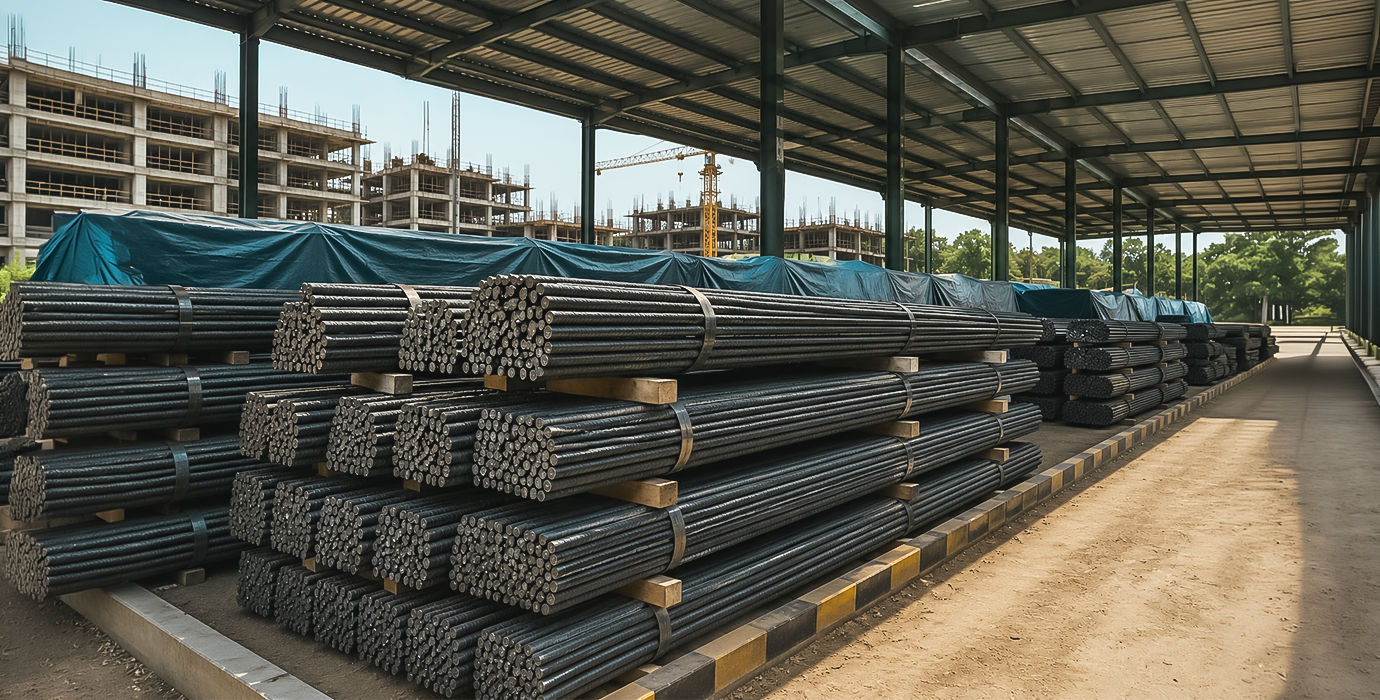
TMT bars are one of the most important materials used in reinforced concrete construction. They give strength, support and stability to foundations, beams, columns, slabs, staircases and other structural elements. However, selecting good-quality TMT bars is only the first step. How these bars are stored and handled at the construction site also plays a major role in protecting their quality before they are used. Here, we answer the most common questions about storing and using TMT bars safely at construction sites in Punjab:
What are TMT bars and why are they important in construction?
TMT bars are steel bars used inside concrete to improve its tensile strength. Concrete is strong in compression but weak in tension. TMT bars help the structure resist bending, cracking, movement and load-related stress.
In home construction, TMT bars are commonly used in:
- Foundations
- Columns
- Beams
- Slabs
- Staircases
- Lintels
- Plinth beams
- Roof structures
Since reinforcement bars remain embedded inside concrete after construction, their quality, storage and handling should be taken seriously. Good storage helps ensure that the right bars are used in the right structural locations.
What is the best way to store TMT bars at construction sites in Punjab?
The best way to store TMT bars at construction sites in Punjab is to keep them raised from the ground, protected from rain and mud, separated by size and grade, clearly labelled and regularly inspected before use. TMT bars should never be dumped directly on wet soil, waterlogged ground or areas exposed to chemicals, cement slurry or heavy vehicle movement.
Why is proper TMT bar storage important at construction sites?
Proper TMT bar storage is important because reinforcement steel directly affects the strength and durability of the structure. If the bars are poorly stored, they may bend, get mixed by size, come in contact with mud or oil, or become difficult to use correctly at site.
Good storage helps protect:
- Structural quality
- Steel value
- Site safety
- Labour efficiency
- Project timelines
- Bar bending and fixing accuracy
- Material identification
A homeowner may choose the right TMT grade and pay the right rate, but careless storage at site can still reduce the value of the purchase. For example, if 10 mm and 12 mm bars are mixed in one pile, workers may waste time sorting them or may accidentally use the wrong size.
Are there industry guidelines for storing TMT bars?
IS 4082:1996 provides recommendations for stacking and storage of construction materials and components at site. For steel reinforcement, the guideline recommends planned storage to avoid deterioration, distortion and corrosion.
Key storage practices include:
| Guideline point | What it means at site |
| Store different classifications separately | Do not mix different grades or types of steel. |
| Store different sizes separately | Keep 8 mm, 10 mm, 12 mm, 16 mm and other diameters in separate stacks. |
| Store different lengths separately | Avoid confusion during cutting, bending and fixing. |
| Keep bars above ground level for long storage | Use supports so bars do not touch soil or water. |
| Avoid distortion and corrosion | Stack bars properly and protect them from moisture and rough handling. |
For TMT bars in Punjab, this is especially useful because open plots may face monsoon rain, winter dampness, dust exposure and soil contact.
Why do TMT bars need special storage care in Punjab?
TMT bars need special storage care in Punjab because construction sites may face changing seasonal conditions. During the monsoon, rainwater can collect in low-lying areas of open plots. During winter, fog and dew may keep exposed steel damp for longer hours. In many residential sites, limited space may also lead to steel being kept near soil, drains, vehicle movement or construction waste.
In Punjab, TMT bar storage plan should be based on:
- Monsoon rain
- Winter fog and dew
- Low-lying or damp plots
- Dust and soil exposure
- Open-site storage
- Limited storage space
- Duration of steel storage before use
- Delivery timing
Normal dust can usually be cleaned before fixing. However, mud, oil, grease, cement slurry or thick deposits should be avoided because they may affect handling, inspection and bonding with concrete.
Should TMT bars be kept directly on the ground?
No. TMT bars should not be kept directly on the ground. Direct contact with soil, wet earth, mud or stagnant water can increase the risk of contamination and heavy corrosion.
Bars should be placed on:
- Wooden sleepers
- Concrete blocks
- Steel frames
- Raised platforms
- Skids or other suitable supports
This keeps the bars away from ground moisture and makes it easier to inspect, lift, count and use them.
How high should TMT bars be stored from ground level?
For long storage, TMT bars should be stacked at least 150 mm above ground level. This helps reduce contact with moisture and allows air movement below the stack.
On smaller residential construction sites, this can be done by placing bars on wooden sleepers, concrete blocks or stable raised supports. The aim is to ensure that the bars do not touch wet soil, mud or standing water.
Should TMT bars be covered with tarpaulin?
Yes, TMT bars should be covered with tarpaulin or waterproof sheets during rain or open-site storage. However, the cover should not be wrapped too tightly around the bars. Proper ventilation is important so that moisture does not remain trapped inside.
A common site mistake is to cover damp or wet bars tightly with plastic sheets for long periods. This can hold moisture around the steel and increase the risk of heavy corrosion or surface deterioration. A better approach is to keep the bars raised from the ground, protect them from direct rain and allow air circulation from the sides. If the bars are already wet, they should be allowed to dry before being covered for extended storage.
How should TMT bars be stored during monsoon in Punjab?
During monsoon in Punjab, TMT bars should be stored on raised supports, covered with waterproof sheets and kept away from low-lying or waterlogged areas. Drainage around the storage area should be checked before heavy rain.
Monsoon storage checklist for Punjab sites
| Monsoon risk | Best practice |
| Waterlogging | Store bars on raised platforms and improve site drainage. |
| Direct rain exposure | Cover bars with tarpaulin or waterproof sheets. |
| Mud contamination | Keep bars away from excavation soil and loose earth. |
| Trapped moisture | Allow ventilation under the cover. |
| Heavy corrosion, pitting or flaky rust | Inspect bars before cutting, bending and fixing. |
| Unplanned storage | Create a dedicated steel storage zone before delivery. |
How should TMT bars be stored during winter in Punjab?
During winter, Punjab construction sites may face fog, dew and damp surfaces. TMT bars should be kept covered, raised and inspected regularly for heavy corrosion, pitting, flaky rust, mud, oil or thick deposits.
If bars become wet due to fog or dew, they should be allowed to dry before being covered for long periods. Site teams should avoid storing damp bars in tightly sealed conditions.
How should different diameters of TMT bars be stacked?
Different diameters of TMT bars should be stacked separately. For example, 8 mm, 10 mm, 12 mm, 16 mm, 20 mm and 25 mm bars should not be mixed in one pile.
Each stack should have a visible label showing:
- Bar diameter
- Grade
- Length
- Quantity or bundle count
- Delivery date
- Supplier or dealer name
- Batch details, if available
- Planned use area, if already decided
This helps workers choose the correct bar quickly and reduces the risk of wrong-size usage in beams, columns, slabs or foundations.
How can proper TMT bar storage reduce construction cost?
Proper TMT bar storage reduces construction cost by preventing contamination, heavy corrosion, bending damage, mix-ups and rework. When steel is organised by diameter, grade and length, workers can pick the right bar for the right use without unnecessary cutting or confusion. For homeowners, this helps protect the money spent on reinforcement steel. It also reduces delays because workers do not have to waste time sorting mixed piles or cleaning bars covered with mud or thick deposits.
Are there Indian safety guidelines for using TMT bars?
Yes. Safe use of TMT bars is covered through a combination of Indian standards and construction safety rules. IS 2502 gives guidance on bending and fixing bars for concrete reinforcement. The BOCW Central Rules also include worker-safety requirements such as eye protection, head protection, protective apparel, gloves and safe working practices at construction sites.
In simple terms, TMT bar safety is not only about storage. It also includes safe unloading, cutting, bending, fixing, tying, movement and worker protection.
Expert insight: What is the right approach to TMT bar storage and safety?
TMT bar storage and safety should be treated as part of construction quality control. A buyer may select the right grade, check the local rate and purchase from a reliable dealer, but if the bars are stored in mud, mixed by size, bent carelessly or handled without worker protection, the project can still face wastage, delays and safety risks.
For Punjab construction sites, the right approach is to consider local site conditions such as monsoon rain, winter dampness, dust, delivery timing and available storage space. TMT bars should be raised, dry, labelled, separated by grade and diameter, inspected regularly and handled by workers using suitable safety gear.