

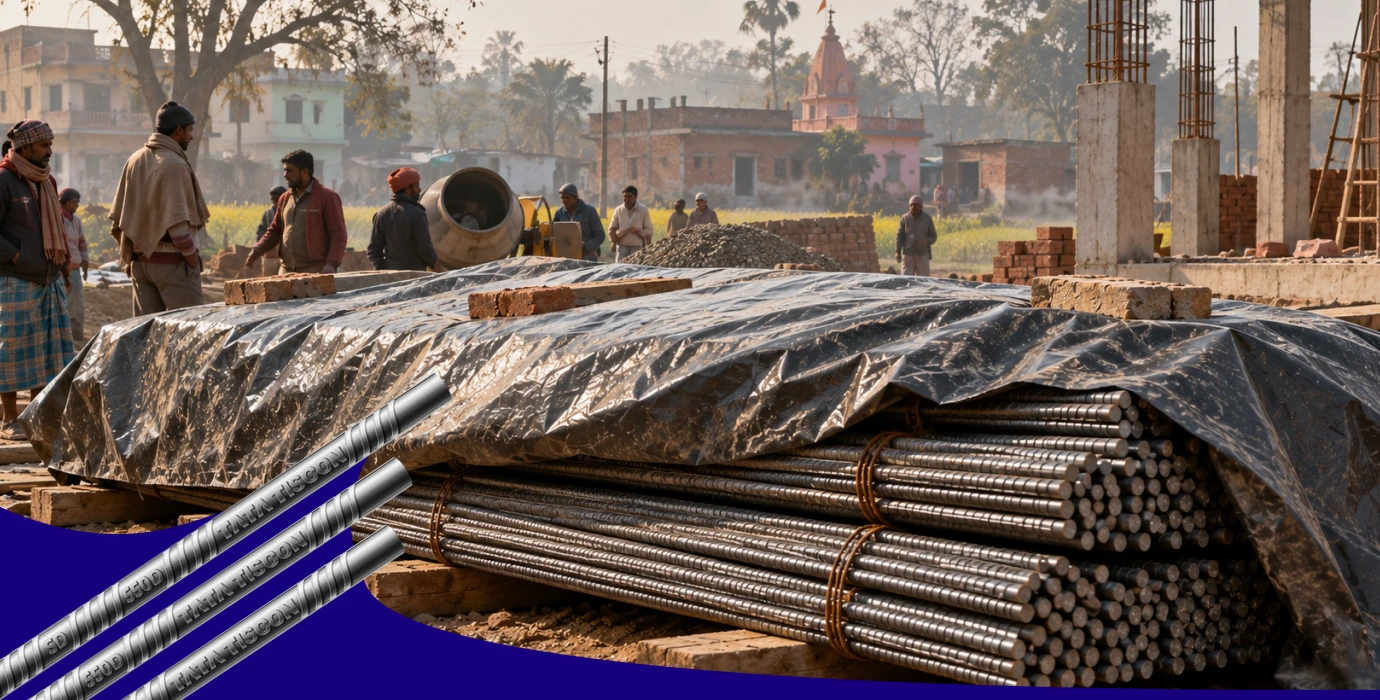
Fog, dew and damp ground can expose reinforcement steel to moisture during Bihar’s winter, even without rainfall. If TMT rebars are left on soil or covered without ventilation, moisture may remain trapped around the bundles.
Correct storage keeps the bars clean, identifiable and ready for use. These steps can reduce avoidable rust, contamination and handling damage.
Why winter storage requires attention
Foggy mornings can leave water droplets on exposed steel. Bare soil may also remain damp where drainage is poor.
Light surface rust does not automatically mean that a rebar has lost its strength. However, heavy scaling, flaking, pitting or visible section loss requires assessment before use.
The objective when storing TMT Rebar During Winter is to limit wetting, prevent ground contact and inspect the material regularly.
Keep rebars clear of the ground
Never place bundles directly on soil, grass or any surface where water can collect.
Use concrete blocks, steel supports or sturdy sleepers to create a stable platform. For long storage, CPWD specifications state that reinforcement bars should be stacked at least 150 mm above ground level. Space the supports so long bars do not sag.
Choose a firm, level and well-drained area. Avoid low-lying locations and places where washing or curing water may flow.
Keeping steel raised is one of the most important TMT Rebar Storage Precautions because it limits contact with mud, water and ground moisture.
Cover the top without trapping moisture
A waterproof cover can protect bundles from dew and unexpected rain. However, sealing wet steel tightly in plastic can trap moisture.
Cover the top while allowing air to circulate around the sides. If the bars arrive wet, let them dry in a ventilated area before covering them. Check beneath the cover regularly for condensation.
Separate and label every stack
Store rebars separately by grade and diameter. Keep bundle tags visible and link each stack to its purchase documents or mill test certificate.
Clear separation prevents the wrong material from reaching the cutting and bending area. Use older stock first where the construction schedule permits to limit prolonged site exposure.
Prevent handling damage
Rebars should not be thrown from a vehicle, dragged through mud or dropped onto hard surfaces. Rough handling can deform bars, damage their ribs and create unsafe conditions.
Use suitable lifting equipment, slings and trained personnel. Support long bundles properly and keep workers clear of suspended loads.
Place the storage area near the cutting yard for practical access, but away from vehicle routes, excavations and water accumulation.
Inspect the bars before use
Inspect stacks after foggy nights, rain or any incident in which the cover has shifted.
Before cutting, bending or fixing, check for:
- Mud, oil, paint or other contamination
- Loose rust scale, flaking or pitting
- Bent or damaged bars
- Missing identification tags
- Mixed grades or diameters
Do not apply oil or grease to prevent rust because it can affect the bond between steel and concrete. If corrosion appears more serious than light surface rust, ask the site engineer to assess the bars.
Buying and receiving rebars in Bihar
Prepare a raised, drained and accessible stacking area before placing the order.
When purchasing 550SD TMT Rebars, check the diameter and quantity against the structural drawings. At delivery, verify the brand and grade markings, bundle tags, quantity and accompanying documents.
Buyers can locate authorised TMT Rebar Dealers in Bihar through the Tata Tiscon dealer locator. To buy 550SD TMT rebars online, use the official Tata Tiscon platform and enter the correct district, sizes and quantity.
Keep reinforcement ready for construction
Winter moisture may appear less severe than monsoon rain, but repeated fog, dew and damp ground can still affect poorly stored steel.
Raise the bundles, cover the top without blocking ventilation, separate each grade and diameter, handle the steel carefully and inspect it before use. These controls keep Tata Tiscon 550SD rebars protected, identifiable and ready for construction.
Frequently asked questions
Can TMT rebars be stored outdoors during winter?
Yes, if the area is firm and well drained, the bars are raised, and the top is covered without blocking side ventilation. Regular inspection is still necessary.
Does light surface rust make a rebar unusable?
Not automatically. Light surface rust may not affect usability, but loose scale, pitting or section loss requires assessment by the site engineer.
Should wet rebars be wrapped in plastic?
No. Tight wrapping can trap moisture. Allow the bars to dry in a ventilated area before providing a secure top cover.